
2026-08-20 · Mike Landry
Electrical Considerations When Remodeling Spanish Fort Waterfront Homes
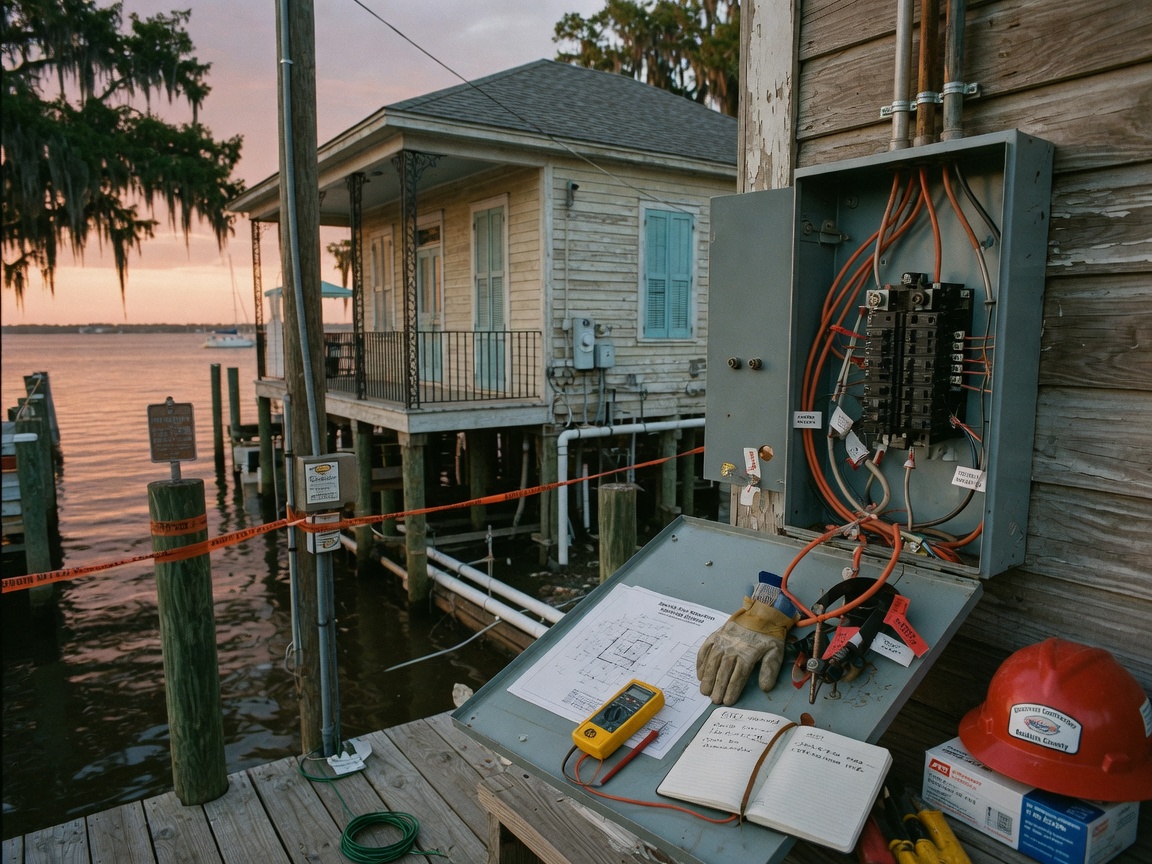
Spanish Fort waterfront homes undergoing remodels often need updated wiring runs, additional GFCI protection, and panel evaluations because of constant exposure to salt-laden air and periodic high humidity from the subtropical climate. Older properties near the Spanish Fort Town Center or along the bay typically feature original aluminum or undersized copper circuits that struggle with added loads from new kitchens, outdoor lighting, and HVAC systems. Addressing these early prevents callbacks once finishes are installed and accounts for the coastal influence that accelerates oxidation on exposed connections.
Evaluating Aging Service Panels and Wiring Runs
Many Spanish Fort waterfront residences built before widespread adoption of modern codes still rely on 100-amp or smaller panels that cannot safely support the circuits required for contemporary remodels. Homeowners in Malbis and near Historic Blakeley State Park frequently discover undersized neutrals and corroded bus bars once walls are opened. A full inspection of branch circuits feeding kitchens, bathrooms, and exterior outlets reveals whether aluminum wiring needs pigtailing or full replacement. Upgrading to a 200-amp panel with room for expansion becomes practical when adding EV chargers or whole-house surge devices, especially given the frequent thunderstorms that roll in from Mobile Bay. These evaluations also consider soil conditions near the water that can shift foundations slightly and stress rigid conduit runs over time.
Addressing Moisture, Salt Air, and Corrosion Risks
The humid subtropical climate in Baldwin County keeps relative humidity high for much of the year, while salt spray from the bay accelerates corrosion on receptacles, switches, and outdoor fixtures. Remodeling projects near the USS Alabama Battleship Memorial Park or Spanish Fort Town Center benefit from specifying marine-grade devices and stainless-steel hardware in exposed locations. Wiring methods shift toward liquid-tight flexible conduit in crawl spaces and garages where condensation forms readily. Proper bonding and grounding become critical because elevated moisture increases the chance of ground faults in areas with concrete slabs poured close to tidal influence. Regular testing protocols after drywall installation help confirm that new installations withstand the coastal environment without premature failure.
Planning GFCI Protection and Surge Measures for Waterfront Loads
Kitchens, bathrooms, and exterior outlets in Spanish Fort waterfront homes require GFCI protection that accounts for both daily humidity and occasional storm surges. GFCI Outlet Testing in Humid Spanish Fort Kitchens and Bathrooms outlines testing sequences that remain relevant during remodels. Whole-house surge protection installed at the panel reduces damage from lightning common in the region, while point-of-use devices protect sensitive electronics in new media rooms. When adding circuits for dock lighting or boat lifts, dedicated GFCI breakers or receptacles prevent nuisance trips caused by the constant presence of water. These measures integrate cleanly with existing service upgrades without requiring repeated wall penetrations later.
Coordinating Temporary Power and Final Inspections
During phased remodels, temporary power setups must remain safe around active construction zones near the water where ground conditions can become saturated. How to Safely Run Temporary Power During Spanish Fort Construction Projects provides practical sequencing that avoids overloading existing panels still in service. Final inspections focus on proper labeling of new circuits, secure mounting of outdoor enclosures rated for wet locations, and verification that all receptacles within six feet of sinks or tubs meet current GFCI requirements. Coordination with Baldwin County inspectors ensures that added loads from new appliances do not exceed the updated service capacity before homeowners return to properties in Daphne or Mobile commuting corridors.