
2026-08-20 · Mike Landry
GFCI Outlet Testing in Humid Spanish Fort Kitchens and Bathrooms
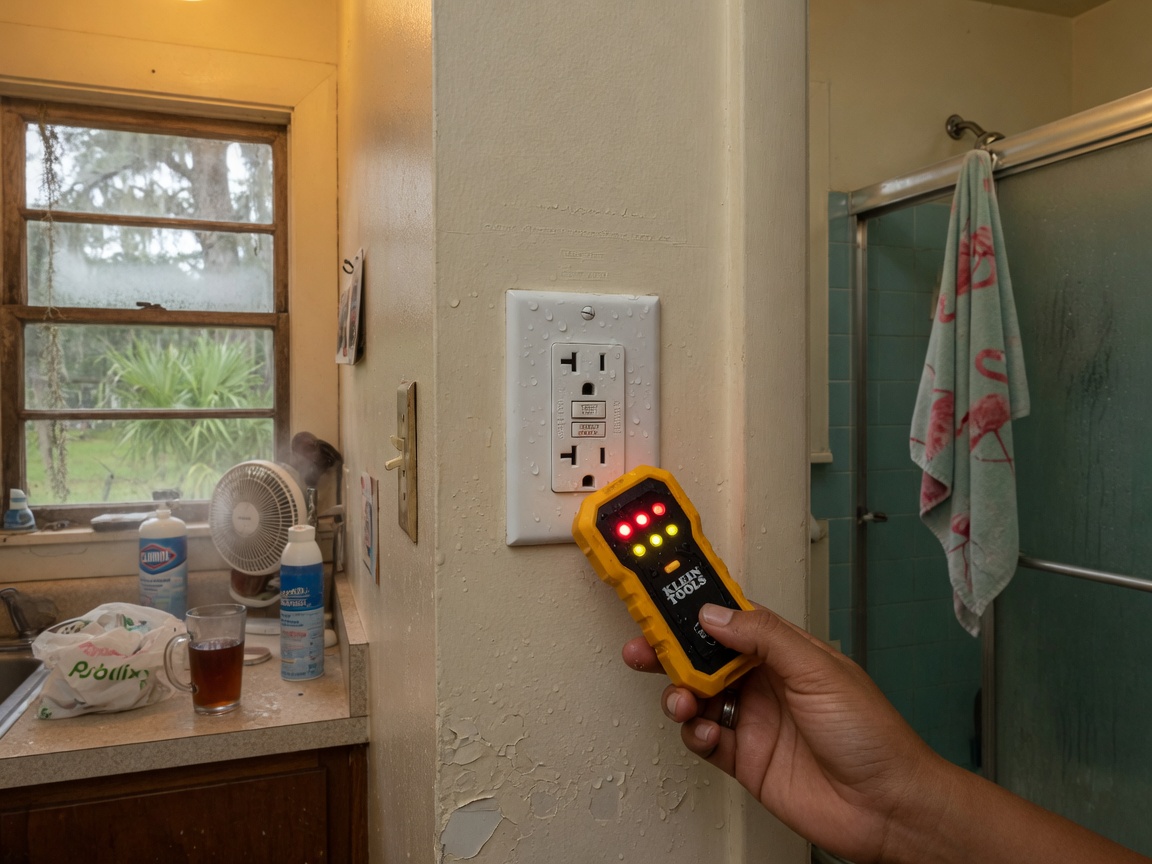
Test GFCI outlets every month in Spanish Fort kitchens and bathrooms because the area's humid subtropical climate with hot summers and coastal influence speeds up corrosion on internal components. Homeowners in neighborhoods like Spanish Fort Town Center and Malbis see outlets fail faster when steam from cooking and showers combines with salt air drifting from Mobile Bay. A working GFCI should trip in 25 milliseconds when the test button is pressed; anything slower or no response means replacement is needed. This schedule prevents shocks in rooms where water is always present.
Humidity and Coastal Moisture Impact on GFCI Performance
Spanish Fort sits in Baldwin County with mild winters and persistent humidity that keeps indoor moisture levels high year-round. Kitchens near Spanish Fort Town Center and bathrooms in Malbis homes experience repeated steam cycles that seep into outlet boxes and degrade the sensing circuitry inside GFCIs. Coastal air from Mobile Bay carries salt that accelerates metal oxidation on contacts, shortening typical lifespan from 8–12 years down to 5–8 years in these rooms. Homeowners notice more nuisance trips during summer when air conditioning runs constantly and condensation forms on wiring. Regular testing reveals these issues early rather than waiting for a breaker to fail during use. The same conditions affect homes near Historic Blakeley State Park where older construction often has less sealed electrical boxes.
Monthly Testing Steps for Spanish Fort Homes
Follow these steps to verify GFCI function in humid conditions: 1. Press the test button on the outlet or the GFCI breaker in the panel and confirm power cuts to connected devices. 2. Press the reset button and check that power returns. 3. Use a circuit tester rated for GFCI to confirm trip speed under load. 4. Repeat after running hot water in the shower or dishwasher to simulate peak moisture. Perform the test when indoor humidity exceeds 70 percent, common during Baldwin County summers. Record results in a simple log so patterns of early failure become visible. This process takes under five minutes per outlet but catches problems that standard visual checks miss in coastal homes.
When Professional Inspection Becomes Necessary
Call for service if monthly tests show inconsistent tripping or if multiple outlets in the same kitchen or bathroom fail within a short period. Spanish Fort properties built before 2000 often have aluminum wiring or undersized neutrals that compound GFCI issues under humid conditions. A technician can check panel connections and replace outlets with weather-resistant models rated for damp locations. Link testing results to a full electrical safety inspections visit when several rooms show problems. Homes near the USS Alabama Battleship Memorial Park or in Daphne experience similar salt-air effects, so patterns across Baldwin County help predict when upgrades are warranted. Avoid DIY replacement on circuits tied to major appliances where improper wiring creates new hazards.
Connecting GFCI Care to Broader Electrical Upkeep
GFCI testing fits into larger seasonal checks that account for Spanish Fort's rare winter freezes and ongoing coastal exposure. Moisture that affects kitchen and bathroom outlets also threatens outdoor wiring, so review related guidance on Protecting Outdoor Wiring from Salt Air Corrosion Near Mobile Bay. Keep records of test dates and share them during any panel or wiring work. This habit supports reliable power in homes throughout Malbis and Spanish Fort Town Center without waiting for failures during peak summer humidity.