
2026-08-20 · Mike Landry
Hurricane Season Electrical Safety Checks for Spanish Fort Homes
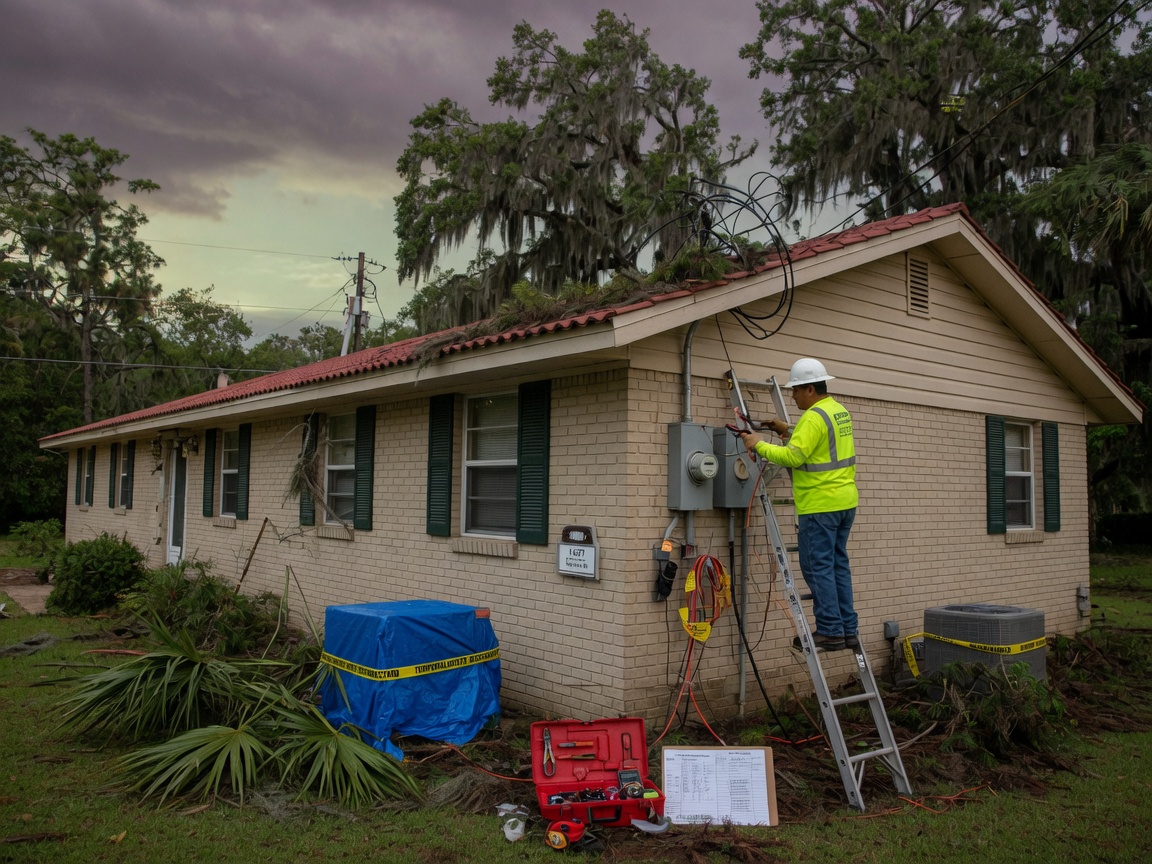
In Spanish Fort homes, hurricane season electrical safety checks begin with verifying whole-home surge protection devices, securing outdoor panels against 70-plus mph winds common in Baldwin County, and testing portable or standby generators for reliable startup, a process that takes 45 to 90 minutes when performed by a technician familiar with local conditions.
Surge Protection for Coastal Storms
Spanish Fort sits in a humid subtropical climate where lightning strikes during hurricane season often travel through power lines from the nearby Mobile area. Whole-home surge protection installed at the main panel stops voltage spikes before they reach appliances in neighborhoods like Malbis. Homeowners should inspect the indicator lights on existing units each spring and replace units showing red after any nearby storm. Coastal salt air accelerates corrosion on unprotected connections, making annual visual checks essential around Spanish Fort Town Center properties. Linking surge devices to electrical safety inspections catches wiring issues early before a named storm arrives.
Outdoor Panel and Wiring Security
High winds in Baldwin County can loosen meter bases and conduit on homes built near Historic Blakeley State Park. Technicians check that panels are mounted with proper brackets and that all outdoor receptacles have intact in-use covers to block driving rain. In Malbis subdivisions, older aluminum wiring requires extra torque testing at lugs because humidity speeds oxidation. Ground rods should sit at least 8 feet deep and remain free of soil erosion common after heavy coastal rains. Any exposed NM cable on exterior walls needs conduit protection to avoid shorts when floodwater reaches 6 to 12 inches.
Generator Readiness and Transfer Switches
Power outages lasting days occur when hurricanes pass near Spanish Fort and affect lines serving Daphne and Mobile. Standby generators sized at 10 to 22 kW keep refrigerators and medical equipment running, yet they must connect through a transfer switch installed by a qualified electrician. Fuel stabilizers protect gasoline stored for mild winters that still bring occasional storms. Weekly no-load tests during hurricane season verify automatic start sequences and battery voltage above 12.4 volts. Residents near the USS Alabama Battleship Memorial Park often schedule these checks in May before peak season begins.
Post-Storm Electrical Assessment Steps
After a hurricane passes, Spanish Fort homeowners should avoid resetting tripped breakers until a visual inspection rules out water intrusion in outlets and panels. Numbered steps include shutting off the main breaker, checking for burning smells, then testing GFCI devices in kitchens and baths. Flooded crawl spaces in Malbis homes require drying before any circuit is re-energized. Documenting damage with photos helps insurance claims when lines from nearby Mobile remain down for extended periods. Scheduling a full electrical safety inspection within 48 hours of returning home prevents hidden faults from causing fires weeks later.
When to Schedule Professional Help
Spanish Fort residents benefit from booking checks in April or early May, before hurricane season officially starts June 1. Homes in Spanish Fort Town Center with pools or EV chargers need extra time for bonding and GFCI verification. Technicians based at 8591 Wimbledon Ct operate Monday through Friday from 7am to 5pm and can coordinate with tree-trimming crews clearing lines near Historic Blakeley State Park. Linking these visits to generator installation services ensures transfer switches meet current Baldwin County codes. Early preparation reduces emergency calls when storms approach from the Gulf.