
2026-08-20 · Mike Landry
How to Safely Run Temporary Power During Spanish Fort Construction Projects
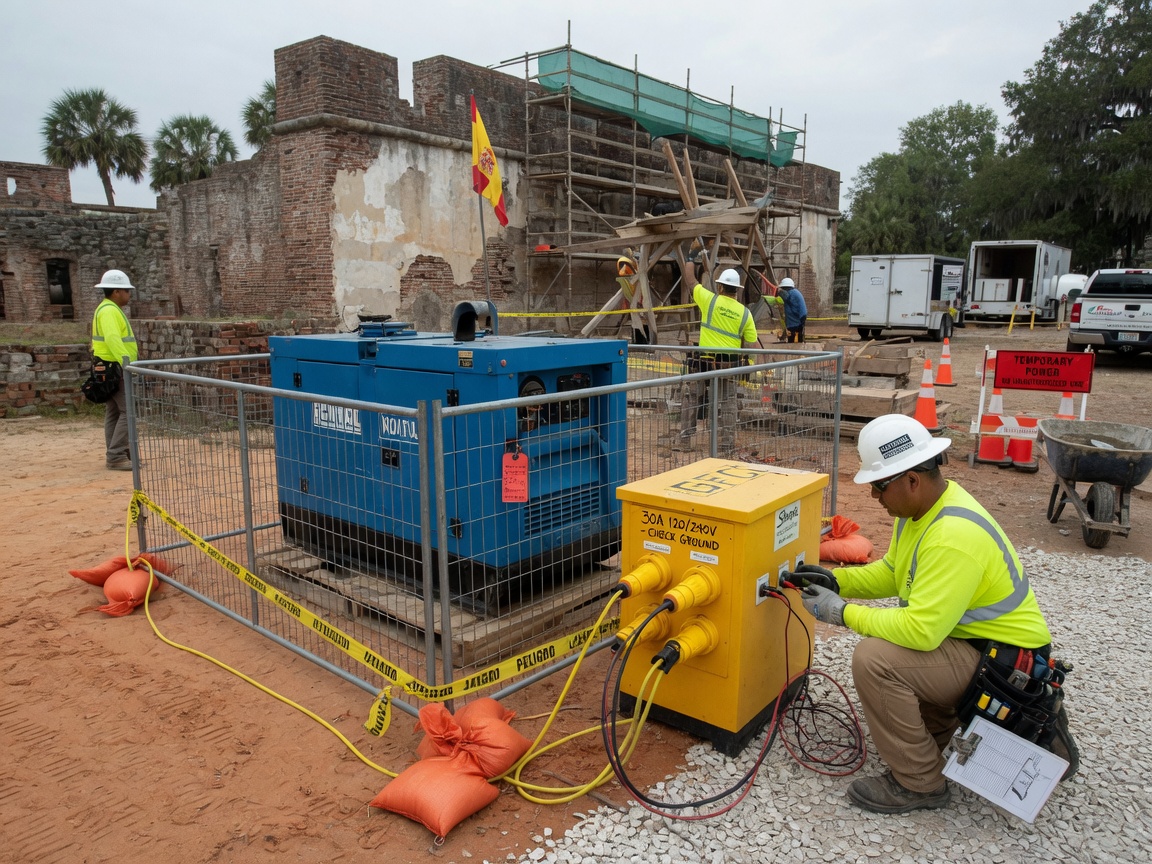
Safe temporary power for Spanish Fort construction projects begins with calculating total amperage needs based on tools and equipment, then installing weather-rated panels and GFCI protection to handle Baldwin County's coastal humidity and occasional storms. This approach prevents overloads and reduces shock risks on sites near Malbis or Spanish Fort Town Center where soil moisture stays high year-round.
Evaluating Power Needs for Spanish Fort Projects
Construction sites in Spanish Fort often involve single-family homes and small commercial builds with 200-amp services already in place. Start by listing every load: saws, compressors, temporary lighting, and welders. Add 25 percent headroom for startup surges common with motors in the humid air. For projects near Historic Blakeley State Park, factor in longer cable runs across uneven terrain that can drop voltage. Use 10/3 or 8/3 SOOW cord rated for outdoor exposure rather than standard indoor wire. If the job will exceed 100 amps for more than a few days, a 100-amp temporary service pole with meter base becomes the practical choice. These calculations keep breakers from tripping during peak summer heat when crews run multiple tools simultaneously.
Protecting Against Humid Subtropical Weather
Spanish Fort's hot summers and mild winters bring constant moisture that corrodes connections faster than inland areas. All temporary panels must carry NEMA 3R ratings and sit on elevated platforms to avoid standing water after coastal rains. Seal every conduit entry with silicone and use weatherproof covers on receptacles. In Malbis developments, where clay soils hold water, bury feeder lines at least 24 inches deep or run them overhead on treated poles. Link this to generator installation when utility power is delayed, and review electrical safety inspections before energizing. These steps stop corrosion that otherwise shorts circuits within weeks of installation.
Step-by-Step Setup Procedures
Drive ground rods to 8 feet and test resistance below 25 ohms before connecting the panel. Mount the temporary service at least 6 feet above grade on a sturdy pole, then run 2/0 aluminum feeders sized for the calculated load. Install GFCI breakers on all 120-volt circuits and label each outlet with its amperage limit. Route cords away from traffic paths and staple them every 4 feet when overhead. For sites close to Daphne, coordinate with Alabama Power for temporary meter sets so the utility can inspect before final connection. Always verify polarity and grounding with a multimeter before any tool is plugged in.
Ongoing Safety Checks and Compliance
Check GFCI function weekly and after every heavy rain, because Baldwin County storms can introduce ground faults through wet cords. Keep a log of inspections that notes date, weather, and any tripped breakers. Replace damaged cord immediately rather than taping it. When lightning activity increases, as covered in what to do when lightning strikes cause power surges in Baldwin County, disconnect nonessential loads and use surge protection at the panel. At project end, remove all temporary wiring and restore the site to permanent service without leaving exposed conductors. These habits keep crews safe through the full build cycle in Spanish Fort's variable conditions.