
2026-08-20 · Mike Landry
Ceiling Fan Installation Tips for High-Humidity Spanish Fort Living Rooms
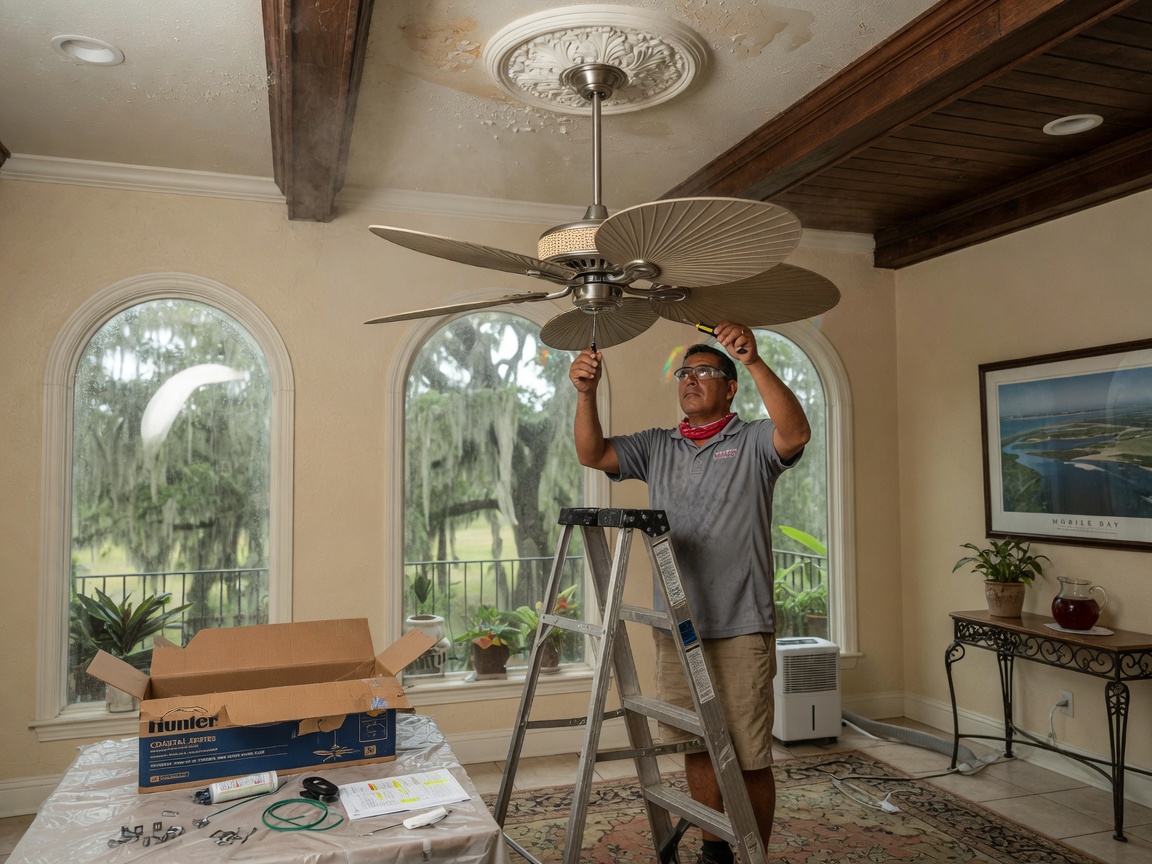
In Spanish Fort living rooms, a damp-rated ceiling fan with sealed motor housing and corrosion-resistant blades lasts 8–12 years when installed with proper attic ventilation and GFCI protection. The humid subtropical climate brings heavy summer dew points and salt air from nearby Mobile Bay, accelerating rust on standard models used in Malbis and Spanish Fort Town Center homes built from the 1980s onward.
Selecting Damp-Rated Fans for Coastal Humidity
Baldwin County homes near Historic Blakeley State Park often feature high ceilings and open living areas that trap moisture during mild winters. Choose fans labeled for damp locations with powder-coated finishes and stainless-steel hardware rather than polished brass that pits quickly. Measure blade span to match room size—52-inch models suit most 15-by-20-foot living rooms common in Spanish Fort subdivisions. Verify the motor carries an IP44 rating or higher so condensation from the ceiling does not reach windings. Pair the fan with a wall control that includes a humidity-sensing switch to reduce runtime when dew points climb above 70 degrees.
Preparing Ceilings in Spanish Fort Homes
Older ceilings in Malbis properties frequently lack adequate insulation, allowing attic heat to drive condensation onto fan canopies. Remove existing light fixtures and inspect the junction box for secure mounting to a ceiling joist or fan-rated brace rated for at least 35 pounds. Add a vapor barrier patch if the home uses blown-in cellulose, which absorbs moisture during humid months. Run a new 12/2 cable from the nearest GFCI-protected circuit when the existing wiring shows signs of age-related brittleness common in Baldwin County construction from the 1990s.
Step-by-Step Installation Practices
Turn off power at the panel before removing the old fixture. Mount the fan-rated box so the canopy sits flush against the ceiling plane to block humid air infiltration. Assemble the motor housing on the floor first, then lift the assembled unit using two people to avoid stressing the downrod. Tighten the canopy screws in a star pattern to maintain even pressure and prevent gaps where salt air can enter. After wiring, restore power and test both high and low speeds for at least ten minutes to confirm the motor does not overheat in the enclosed space.
Addressing Wiring and Circuit Needs
Many Spanish Fort living rooms share circuits with recessed lighting installed during the 2000s housing boom. Add a dedicated 15-amp circuit when two fans plus existing loads exceed 80 percent of breaker capacity. Route cable through attic spaces while maintaining 12-inch clearance from HVAC ducts that produce condensation during summer operation. Ceiling fan installation follows the same permitting path as other electrical installation work in Baldwin County.
Ongoing Care in Humid Conditions
Wipe blades monthly with a microfiber cloth dampened in mild soap to remove salt film that builds during southeasterly winds off Mobile Bay. Lubricate the motor sleeve bearings once per year with manufacturer-specified oil to offset the effects of constant 60–70 percent relative humidity. Schedule annual inspection of the mounting bracket torque, especially after hurricane season when vibration can loosen hardware. Readers managing similar moisture issues in kitchens may find value in GFCI outlet testing in humid Spanish Fort kitchens and bathrooms.