
2026-08-20 · Mike Landry
Managing Landscape Lighting Damage from Spanish Fort Lawn Equipment
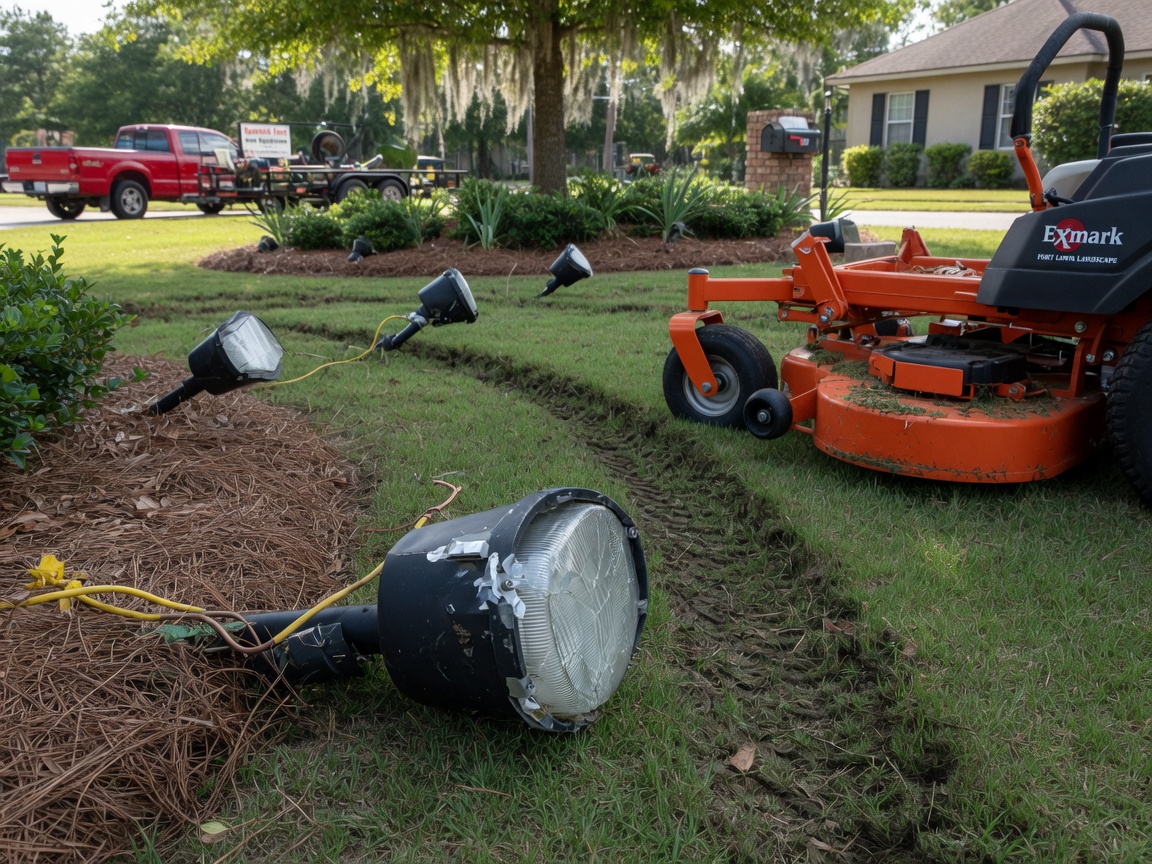
In Spanish Fort yards near Spanish Fort Town Center and Malbis, the most effective way to manage landscape lighting damage from lawn equipment starts with installing metal or composite guards around fixtures and raising lights 12–18 inches above typical mower deck height. This approach stops the majority of string trimmer and mower strikes that sever low-voltage lines or crack housings during weekly maintenance in Baldwin County. Homeowners who add these guards see fewer outages during the long growing season driven by the area's humid subtropical climate.
Common Equipment Damage Patterns in Local Yards
String trimmers account for most cuts to exposed low-voltage cable in Spanish Fort properties because operators work close to beds along driveways and walkways near Historic Blakeley State Park. Mower decks then finish the job by catching already weakened wires or shattering plastic lens covers. In older homes with established landscaping, roots push fixtures lower over time, increasing contact risk. Salt air from the nearby Mobile Bay further weakens insulation once nicks expose copper, accelerating corrosion during mild winters when crews continue mowing. Checking fixtures after each cut and noting any exposed wire prevents small damage from turning into full circuit failure.
Guard and Placement Solutions for Baldwin County Yards
Install 6-inch metal collars or rock rings around each fixture base to deflect trimmer line while allowing water drainage in the coastal humidity. Position new lights on 18-inch risers or mount them on tree trunks and fence posts at least 24 inches high where beds meet turf. In Malbis and Spanish Fort Town Center developments, this height clears most residential mower decks yet keeps illumination even across pathways. Route cable through 1/2-inch conduit buried 6 inches deep along bed edges to protect against repeated passes. These steps reduce service calls for damaged landscape lighting by addressing the exact conditions created by frequent mowing in the region's hot summers.
Repair Steps After Equipment Strikes
When a trimmer slices cable, isolate the run at the transformer, cut back to clean copper, and splice with waterproof connectors rated for direct burial. Replace crushed fixtures rather than attempting field repairs on cracked housings that allow moisture intrusion during coastal storms. For homes near the USS Alabama Battleship Memorial Park where underground runs cross irrigation lines, trace the full circuit before splicing to avoid hidden damage farther down the line. Technicians familiar with Spanish Fort wiring often combine these repairs with upgrades to heavier 12-gauge cable that withstands occasional contact better than thinner stock. Schedule such work during the milder winter months when outdoor access remains comfortable.
Ongoing Maintenance Tied to Local Conditions
Inspect landscape lighting every 60 days during peak growth from March through October, focusing on beds that receive weekly equipment traffic. Clear debris from guards after heavy rains common in the humid subtropical pattern, and re-secure any risers loosened by soil movement near the Eastern Shore. Pair these checks with seasonal surge protection reviews to guard against lightning that often accompanies summer storms. Residents in Daphne and Mobile who follow the same schedule report longer fixture life because early detection stops salt-air corrosion from spreading through small nicks. Professional electrical repair teams can document runs and note any areas needing conduit upgrades before the next mowing season begins.