
2026-08-20 · Mike Landry
Maintaining Generator Connections for Hurricane Backup in Spanish Fort
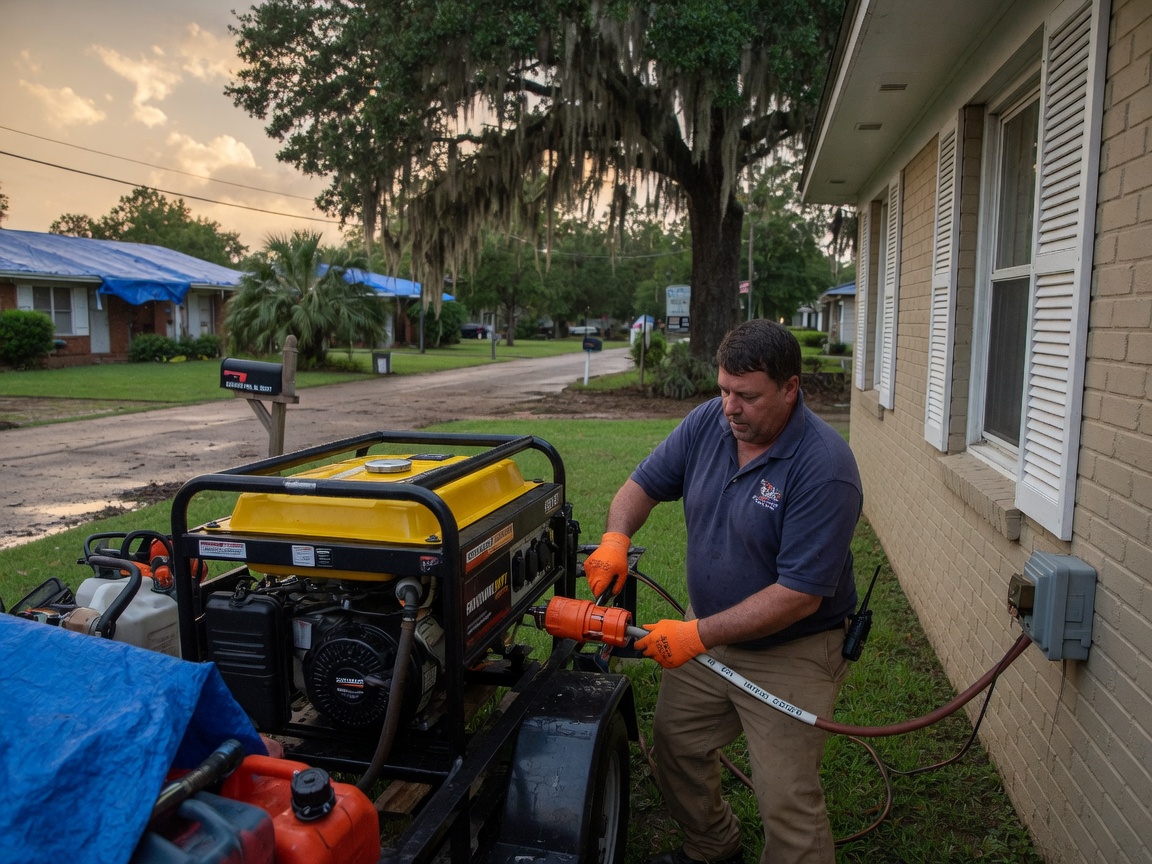
Generator connections for hurricane backup in Spanish Fort should be inspected at least twice annually, once before June and again after November, to handle the area's frequent tropical storms and high humidity that accelerates corrosion on terminals and wiring.
Hurricane Season Demands in Baldwin County
Spanish Fort sits in Baldwin County where the humid subtropical climate brings hot summers, mild winters, and frequent coastal storms that knock out power from Mobile to Daphne. Homes near Spanish Fort Town Center and Malbis often feature elevated structures or older wiring exposed to salt air, which speeds up oxidation on generator transfer switches and inlet boxes. These conditions mean connections loosen faster than inland areas, and standing water after storms can short out poorly sealed plugs. Residents near Historic Blakeley State Park or the USS Alabama Battleship Memorial Park face similar risks because of the shared coastal exposure. Checking torque on lugs, cleaning corrosion with dielectric grease, and verifying that the transfer switch engages within 10–15 seconds keeps systems ready. Local soil saturation also affects ground rods, so testing resistance below 25 ohms prevents faults during wet periods.
Common Connection Issues in Spanish Fort Homes
Older homes in Malbis and around Spanish Fort Town Center frequently show loose neutral connections or undersized inlet wiring that cannot handle modern portable generators rated 7,000–12,000 watts. High humidity causes condensation inside outdoor enclosures, leading to pitted contacts that fail exactly when residents need backup after a storm passes through Baldwin County. Nearby cities like Daphne and Mobile report similar patterns where coastal winds loosen conduit straps over time. Checking for melted insulation around the 30-amp or 50-amp plugs and ensuring the grounding conductor remains intact avoids dangerous back-feeding into utility lines. Homeowners should also watch for insect nests in unused inlets, a frequent issue in the region's mild winters that blocks proper seating of generator cords.
Step-by-Step Maintenance Practices
Begin each check by shutting off the main breaker and confirming the generator is cool before handling any connections. Inspect the inlet box cover gasket for cracks that allow moisture intrusion common in Spanish Fort's coastal influence. Tighten all terminals to manufacturer specs, usually 20–25 inch-pounds for most 30-amp models, then apply anti-oxidant compound. Test the automatic transfer switch by simulating an outage and timing the switchover to under 15 seconds. Replace any cord showing UV cracking after 5–7 years of outdoor storage. Document each inspection with photos and notes on readings so patterns emerge before the next hurricane season arrives from the Gulf.
Knowing When Professional Help Is Needed
If resistance readings exceed 25 ohms at the ground rod or the transfer switch chatters during tests, contact a local electrician rather than attempting further adjustments. Homes built before 1990 near the Eastern Shore often require panel upgrades before reliable generator connections can be added. Professional generator installation ensures the inlet matches the home's service size and local codes. Pairing this with surge protection guards sensitive electronics when power returns after storms. For properties in Daphne or Mobile with similar setups, reviewing upgrading older fuse boxes in eastern shore historic homes provides additional context on handling legacy wiring. Pro Electrical Solutions LLC at 8591 Wimbledon Ct, Spanish Fort, AL 36527 handles these evaluations Monday through Friday from 7am to 5pm.